
Points + Miles
How I use points, miles and credit-card rewards to stretch a real single-income family travel budget, from quick weekend trips to four business-class seats to Europe.
How we turned ordinary spending into more travel
The Short Version
If you spend money anyway, you may as well get travel perks.
I don't have an unlimited travel budget, so points and miles have become one of the ways I can prioritize travel without sacrificing my monthly bills.
I started small. My first redemption was two Hyatt nights in Puerto Rico for my best friend's wedding.
Since then, I've used points and miles for resort stays, spontaneous weekend trips, flights for my mom, entire family trips—and my biggest redemption to date: four business-class tickets to Europe.
I learned the foundations of points and miles through 10xTravel's free course and podcast, then figured out how to make those strategies work for my own spending and travel style. I'm not perfectly optimized, and I'm definitely not trying to be. I just want the money I'm already spending to work a little harder toward the experiences we want.
Sarah's Playbook
Four principles that make this hobby worth it.
Earn flexibly, redeem specifically
Cards that earn transferable points (Chase Ultimate Rewards, Amex Membership Rewards, Capital One Miles) are more flexible than cards locked to one airline or hotel chain. Each card is chosen with consideration to long-term benefits, not with one single trip in mind.
Pay in full, every month, no exceptions
Interest will erase any reward you could possibly earn. If you can't pay the balance in full, this hobby is going to cost you money — and that defeats the entire point. When expenses are high? The hobby gets put on hold, full stop.
Welcome bonuses move the needle
Some of my biggest points balances started with a well-timed welcome offer. But, I learned to budget and got a grasp on my monthly spend first. Then, I only consider one when the required spending fits expenses I was already planning—not as an excuse to spend more.
I don't chase perfection
Sometimes points get me an incredible business-class seat. Sometimes they get me a hotel room in Lubbock. If points cover something I actually need and make the trip fit my budget better, that's a useful redemption to me. The value it brings to my life and plans is greater than any points-per-dollar considerations.
Points in real life
Where my points have taken us
From a two-night wedding stay to four business-class seats to Europe, points and miles have helped turn trips that might have been “maybe someday” into trips we could actually take.

Puerto Rico
Where it all started
My first redemption: two nights at a Hyatt for my best friend's wedding. It wasn't an extravagant redemption, but it was the first time I put everything I'd learned into action. I was nervous!

Florida
When the hotel WAS the vacation
Four nights at Hyatt Regency Coconut Point because my son always wants to spend his days at the hotel pool. Plus American Airlines flights booked with Alaska miles—including our first business-class seats, because the redemption was too good to pass up and I was eager to make my first jump out of Economy.

Chicago
The impromptu trip because we could
A 48-hour trip to meet my best friend during his conference. A Hyatt room on points at the same hotel, on the same floor!

Indianapolis
Almost the whole trip on points
American Airlines flights + Hyatt hotel on points, with my Sapphire Reserve travel credit helping with the rental car.

Europe
The Redemption I still pinch myself over
Four Virgin Atlantic business-class seats from Seattle to London using Chase + Amex points, hotels on points in 3 cities (and 3 countries)—including two London rooms—and four AA award seats nonstop from Rome to home.
And the Best Part?
We're not done yet. I'll keep adding the trips points and miles help make possible—and linking the full stories as I write them.
In My Wallet
The cards I actually carry.
I have more cards than I regularly carry in my physical wallet, and they definitely don't all get used equally. Some are everyday favorites, some have one very specific job, and a few were carefully selected for their great welcome bonus. Here's how they actually fit into my strategy.
Referral disclosure: Some links below are referral links. If you're approved through one of them, I may receive points or another benefit at no additional cost to you.

Chase Sapphire Reserve
My favorite travel card · Annual fee $795
This is my favorite card because the benefits are unbelievable. The annual fee is steep, so I’m intentional about making the most of the benefits. Between the $300 annual travel credit, travel benefits, lounge access and other perks, I’ve been able to make the math work for the way I travel. I’m finally putting its included Priority Pass to the test on our Europe trip.
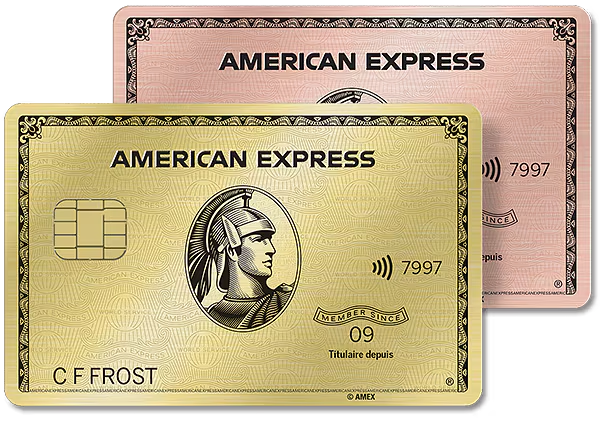
Amex Gold
MY GROCERY + DINING WORKHORSE · $325 ANNUAL FEE
Groceries are one of my biggest regular expenses, so this card is an easy pick. I earn 4X Membership Rewards points at U.S. supermarkets and restaurants, and I actually use benefits like the semi-annual Resy credits. A chunk of the points that helped put the four of us in business class to Europe came from Amex. It also links with Rakuten to maximize rewards!

Chase Freedom Unlimited
WHERE MY CREDIT-CARD STRATEGY STARTED · $0 ANNUAL FEE
This was my first intentional step toward earning travel rewards. The 1.5x on every purchase makes it easy to use as an everyday card without thinking about categories. It also introduced me to Chase Ultimate Rewards before I eventually added Sapphire cards and learned how to use transfer partners.

Chase Sapphire Preferred
MY FIRST TRUE TRAVEL CARD · $95 ANNUAL FEE